
Had solar for years & considering an upgrade? It’s probably not necessary

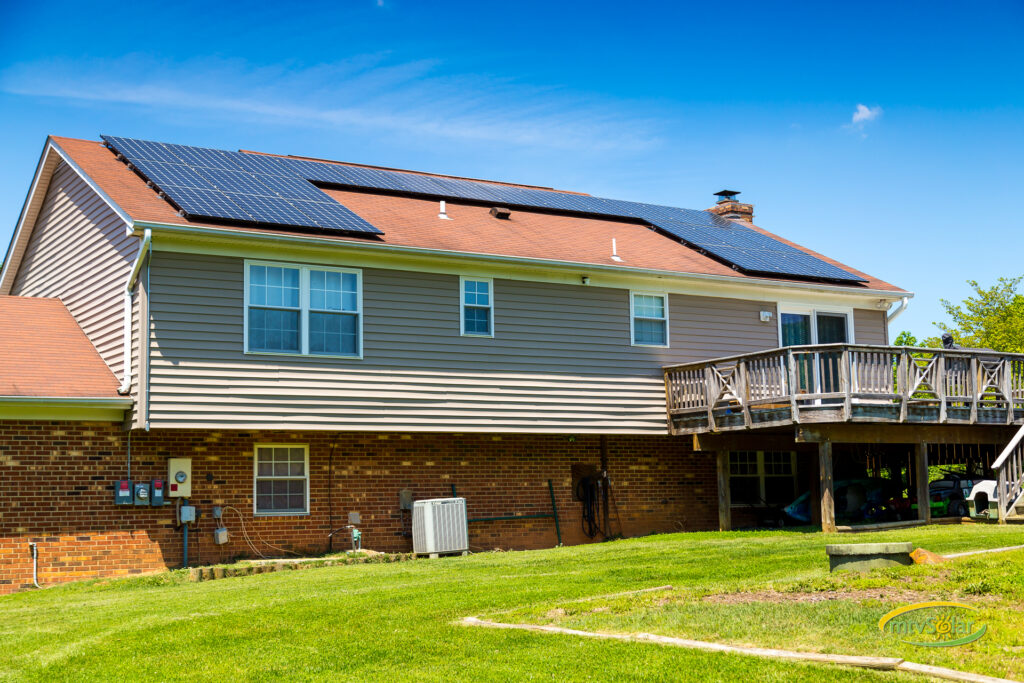
Solar technology has evolved and advanced since mtvSolar got into the renewable energy business in 2009. There are new components emerging all the time — inverters, optimizers, panels, batteries, mounting hardware and more. Does that mean the solar generating system that’s been on your roof, faithfully sending power to your home, is outdated? Most likely it’s not.

While panel efficiency has improved some over the years, a solar PV panel that’s been collecting rays on your roof for 10 years is probably doing its job just fine, and will continue to for another 15 or more years.
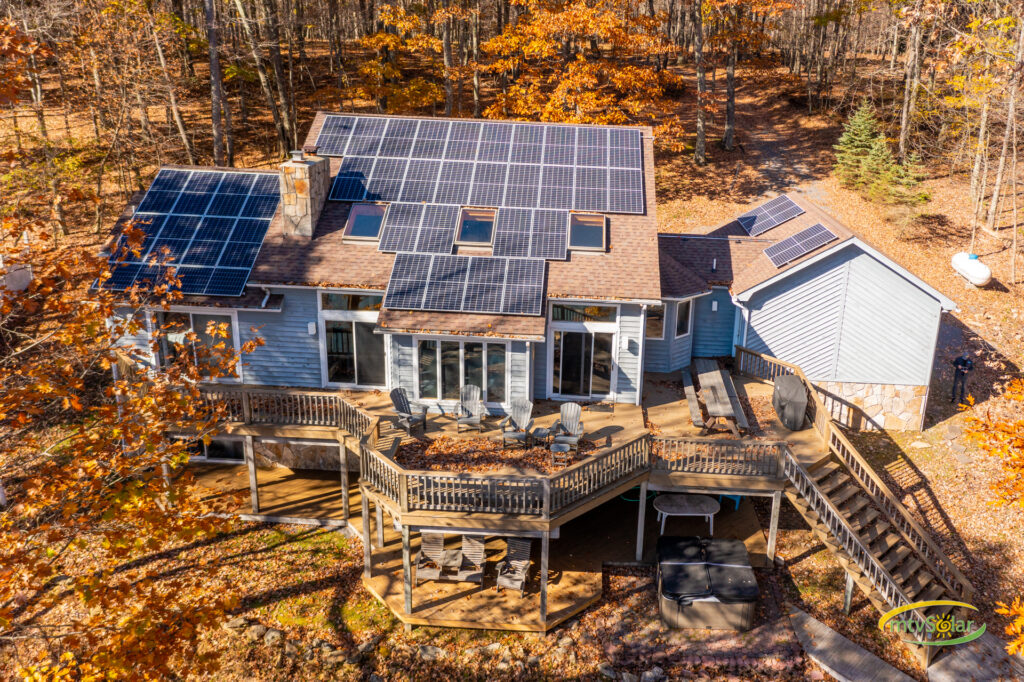
In a recent informational article, the U.S. Department of Energy’s Solar Energy Technologies Office tells solar system owners to expect a long life for their panels: “While the average system’s power output diminishes slightly with time, most systems maintain at least 80% of their initial power output for at least 25 years.”

Solar panels are built to last, out in all sorts of weather. And they’ll keep working, especially if your system has a good monitoring component that alerts you to any problems and your solar installer stands behind their work, offering service for any snags.

As the Department of Energy notes, solar energy owners may find that their energy needs have changed over time, and they’d benefit from adding panels to a roof or ground-mounted array. As electric rates rise, homeowners often contact us to build out their solar systems, having seen their energy savings add up over years.

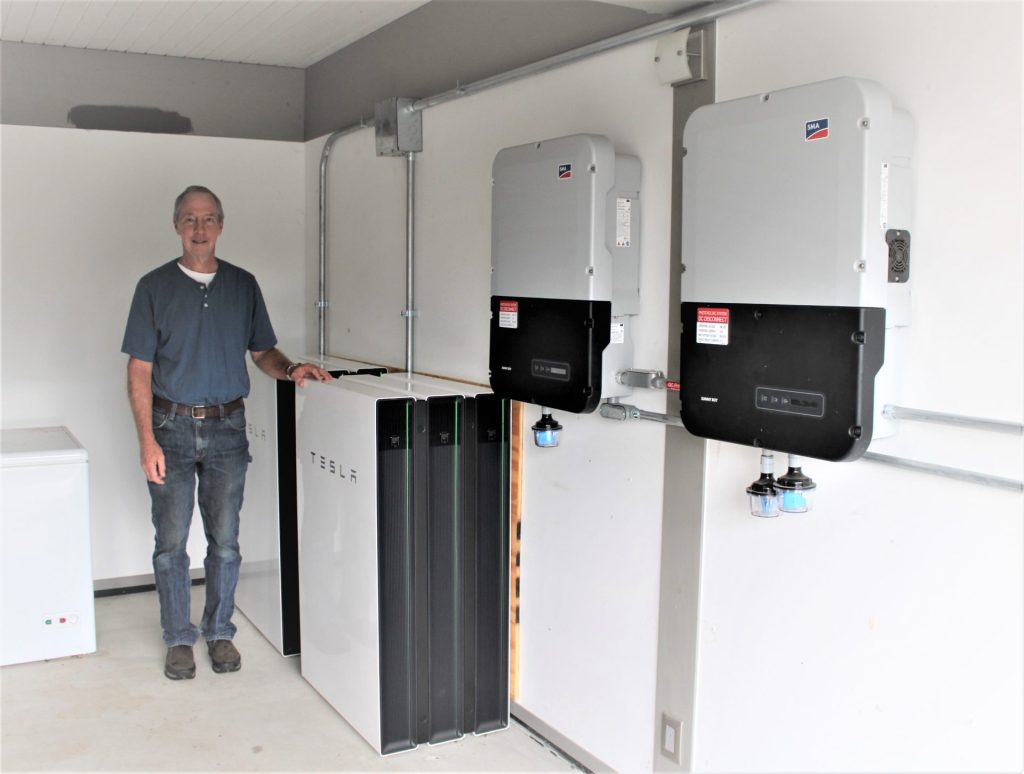
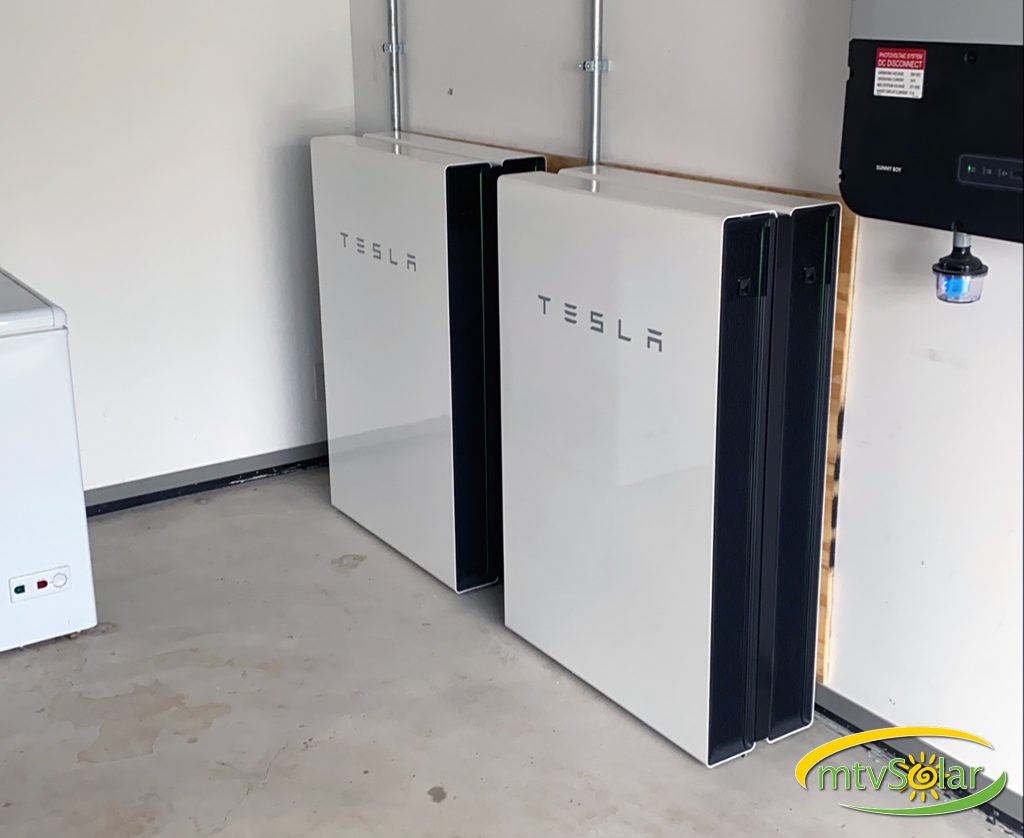
The other option for an established solar generation system is to add battery storage, which allows panel owners to manage their own usage more closely and reduce their reliance on the electric grid for more reliability and flexibility. In some locales, electric customers pay a premium for power they draw during “peak” times. A battery system working with solar panels provide the option for a homeowner to use their own stored solar power during that expensive “peak” time, then recharge or switch back to grid power during cheaper energy periods.

If having the newest, sleekest solar panels on your home is still a goal, several factors should be considered:

–The cost of labor to remove and replace the panels

–Replacement costs for components that will work together with any existing units

–Reduction in net metering revenue, if state laws have changed since your initial solar installation. Many locales have cut how much they pay solar owners for their excess energy in recent years. Replacement systems may trigger those new lower rates.

mtvSolar is happy to help customers make wise choices about possible upgrades and additions to their renewable energy system. We can assist in weighing your energy goals and budget, and finding ways to make the most of your energy savings for decades to come!

Just a sidenote: Because we love to share the solar, mtvSolar continues to donate used or excess solar PV panels to our community non-profit partners, boosting their ability to cut electricity costs and use their funds instead to support their service missions. If our customers upgrade their system and have working panels, we save them for this purpose.

Have questions about upgrading or boosting your renewable energy system? Get in touch and see what mtvSolar can do for you.

Storm-proof your summer with solar & battery power

Intense summer storms that bring heavy rain and high winds can be just as disruptive to the power grid as snowy winter blasts. And hot-weather power outages pose their own challenges — how do we keep cool without electricity? How do we preserve our food supply without power for our refrigerators and freezers? How do we keep water flowing from a residential well into a home without electricity for a pump?

In most areas, power outages during a summer storm can be brief. But the growing intensity and frequency of seasonal weather has energy experts making it clear that the U.S. power grid is under stress, making longer outages more likely and frequent. Their answer — build a more resilient source of power, including renewables.

“A resilient power system reduces the likelihood of long-duration outages over large service areas, limits the scope and impact of outages when they do occur, and rapidly restores power after an outage,” the U.S. Department of Energy says in a look at energy resilience. “Clean energy can help prevent electric grid disturbances and enable fast recovery after a disturbance. Using renewable energy resources—solar, water, wind, geothermal, and bioenergy—and enhanced power electronics gives us more ways to keep the power on or bring it back after an outage.”

But how does that help a homeowner now? The model is clear — having a source of renewable energy protects your power supply, bridges short power cuts and makes it possible to weather long power outages while supplying basic needs.

mtvSolar customers with solar panels and battery backup systems often don’t even know the power is out in their neighborhood because their lights stay on, refrigerators stay cold and cooling systems keep running during short outages. Their electrical monitoring will alert them, but otherwise life goes on as usual. For longer outages, the cycle of solar charging for battery systems is easily managed by customer controls that let them choose how to spend their solar-generated power. Customers have shared their stories of protecting valuable resources by having solar and batteries during a long electrical disruption.

Want to build your own power resilience for the summers and winters ahead? mtvSolar has the experience to design a system that is proven to work as you need it, for your particular power needs. Get in touch — we’re ready to walk you through your options and set up a site visit to get started.

Solar & battery systems that can grow with you

Making the decision to invest in a solar PV system is a big one, and homeowners rely on the expertise of a consultant, salesperson and installer to guide many of their choices. One of the biggest is how much electricity the system will generate and deliver for the customer’s needs. But what if those needs change over time? Most solar panels and components have a lifespan of 25-30 years, and a lot can change for a customer during those years.

A family can grow, appliances change, new rooms or buildings might be added to a property, and more! Any of those events may add to energy demands. Outside forces like electricity rates and trends in electric vehicles can also lead some solar and battery owners to want to add to their energy systems years after an initial installation.

Because mtvSolar has been in the energy business for over 15 years, we understand our customers’ needs today AND tomorrow. We have successfully expanded many of our customers’ solar PV panel and battery backup systems, connecting original equipment to newer components, or upgrading key parts of their system to accept new panels or batteries as technology evolves. Many of our solar PV systems are designed with these potential expansions in mind, making it easier for your system to grow with you and your needs.

Choosing an experienced and professional solar installer like mtvSolar means your panel and battery system will continue to function as it needs to, and can evolve over time to meet your electricity demands.

One of our customers in Morgantown, W.Va. shared their experience:

“In November 2021, mtvSolar completed a beautiful 13.12 kW rooftop solar array for us. The installation went as planned and on budget. We added a Level 2 charger in March 2022 as we had purchased an EV. Then that Memorial Day, a holiday, mtvSolar informed us that our invertor had stopped working. Three weeks later, mtvSolar had installed a new invertor under warranty and we were up and running. That’s prompt service!! In November 2023, we had Mike Studholme design a 3.36 kW expansion to supply the
additional power needed for the EV we had purchased in 2022. mtvSolar attended to all the details. Our expansion was completed in February 2024. It matches the original solar array and is producing the estimated power we needed to supply our EV.”

As you consider going solar, look for a solar installer that can meet your energy needs today AND tomorrow, with service to keep your new system operational and expertise to expand into the future.

Solar in the news: American-made renewables take center stage

Energy independence isn’t just for homeowners who want to own their own power sources. It’s a national movement, fueled by the desire to rebuild America’s energy supply-chain and bolster the country’s power infrastructure. Modern demands for electricity are growing, and the grid can’t always keep up with traditional sources of power. Advocates for domestic renewable energy have been on the forefront of the issue for decades, and the day for renewables appears to have arrived.

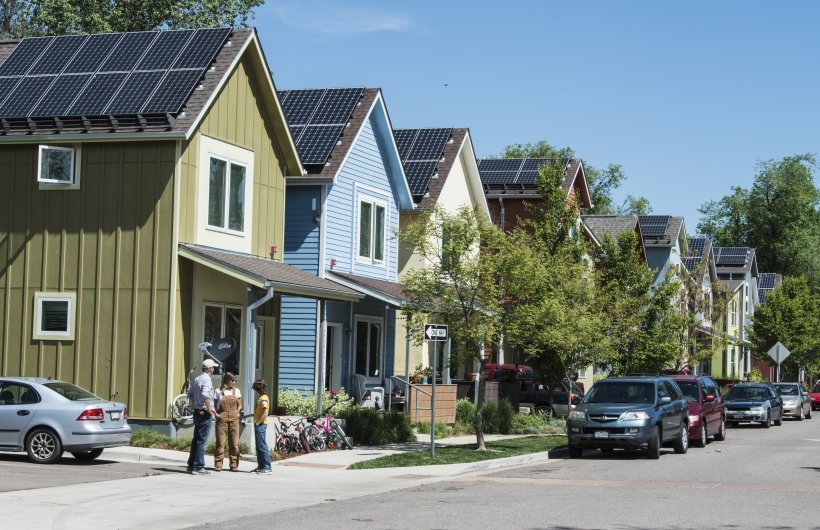
Homeowners and business owners can now leverage tax incentives that are in place to put American-made renewable energy components front and center. In areas of the country that are transitioning away from traditional fossil-fuel energy economies, those incentives are even bigger.

Photo courtesy of National Renewable Energy Laboratory.

The U.S. Department of Energy is harnessing federal funds to encourage installers and customers to buy solar and other power parts that are Made in America. Not only that, there’s a strong push to build out America’s renewable energy section in all its facets — from manufacturing to new technology innovation and workforce training.

The federal Solar Energies Technology Office has crafted several solar-focused American Made Challenges that put cash on the line for new and effective technologies, ways of measuring renewable energy effectiveness and tools to integrate solar, wind and hydroelectric power with the existing power grid.

These efforts to ignite new thinking about renewable energy methods and solidify the market for American-made components will be shaping the energy sector for decades to come. Solar and energy storage technologies will keep getting better as more and more young minds focus their energy on our energy.

mtvSolar has been using American-made solar components since its founding and continues to partner with U.S. companies that make high-quality solar products with proven performance. Many of our customers specifically request American-made components and we are well-versed in the best choices to meet their energy needs and stay on budget.

A natural partnership: Staying local for clean energy

Berkeley Springs propane company Blue Flame has grown rapidly in the last 15 years, expanding their service area and investing in a new storefront and showroom along Valley Road. High demand for clean-burning propane for construction and residential use has driven Blue Flame to add storage capacity, widen their customer base and become the leading propane provider in the tri-county area. 

The roots of the family-owned company are in Berkeley Springs and reach back into the 1970s. Initially owned by the Bohrer family, the company passed into the hands of the Haldeman family in 1994. Blue Flame is a key part of the local economy as an employer, service provider and community-minded company. 

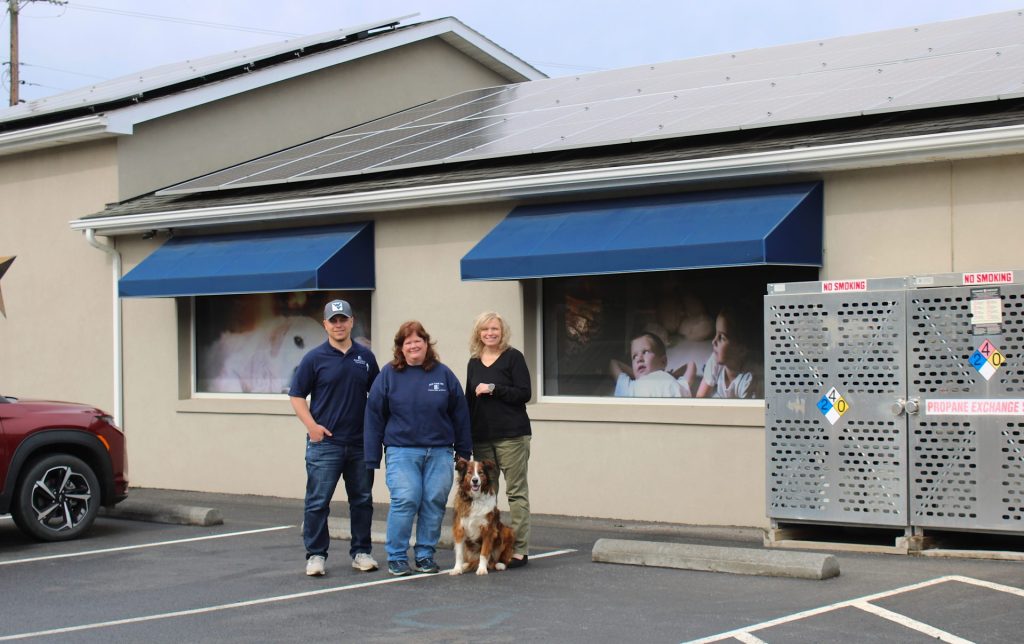
Blue Flame in Berkeley Springs equipped with 70 solar panels. Heather Haldeman, center, is the company’s Business Manager. She is pictured with Blue Flame operations team Shaun and Terri, and rescue dog Max.

Heather Haldeman, Business Manager at Blue Flame, said when she started thinking about adding solar panels to the company offices, it only seemed natural to choose another Berkeley Springs business – mtvSolar – to be the propane company’s solar installer.

“We’re both in the energy business. I’d much rather work with a local company and have that nearby connection. If you have an issue, they’re right up the road and they’re very responsive,” Heather said of mtvSolar.

Being part of a move toward clean energy, Blue Flame decided on a next step to multiply their impact – adding solar panels to the roof of the company offices. 

“We really looked at it – there’s a changing world and clean energy is on people’s minds,” said Heather. “It is a natural partnership to partner solar with propane.”

Working with Senior PV Consultant Jabari Baker, Heather decided to maximize the roof space and have 70 solar panels installed. The plan was to essentially “zero out” Blue Flame’s annual electrical consumption with solar energy. Once the solar panel system was activated and the panels started generating power, electric bills for the Valley Road office dropped to the basic commercial billing level.

“We save about $4,000 per year,” said Heather.

Taking advantage of Rural Energy for America Program (REAP) funding for small rural businesses helped offset the costs of the solar installation significantly. Blue Flame received a 30% REAP grant when planning the project in 2022. The funding level for REAP has since risen to 50% for eligible companies. 

“With the REAP grant where it is now makes it even more feasible. If your business is highly electric-intensive, the more sense it makes,” said Heather.

Working with mtvSolar and Jabari Baker smoothed the process for Blue Flame to apply for and get the REAP funding, Heather said.

“They did a great job managing that process. It’s an extensive process,” she said.

Heather praised mtvSolar’s customer service, Baker and the company’s way of doing business.

“Jabari is great. I’d like to hire a couple of Jabaris,” Heather joked. “What I like about him is he’s calm throughout the process. If I had a question, he was willing to answer it without hurrying me to get past it.”

For the most part, Heather forgets that Blue Flame’s electrical supply is coming from the 70 panels on the company roof. But customers and passers-by take note of the sleek panels and mention the solar array. 

“It’s very public and people notice it,” said Heather. For Blue Flame, the panels are now just part of their clean energy business.

Why a Qualified Solar Installer is key to your home’s Solar Power Success

The solar power industry is booming around the world, and the United States is no exception. As more and more homeowners look to solar energy to power their lives, the demand for qualified solar installers is skyrocketing.

But what exactly does it mean to be a qualified solar installer? And why is it so important to choose an installer with the right experience and qualifications?

In-depth training is essential for safety and efficiency in solar installations. Qualified installers have the knowledge and skills to properly install and maintain solar panels, ensuring that your system operates safely and efficiently for years to come.

Here are some of the benefits of choosing a qualified solar installer:

  • Safety: Solar installations involve working with electricity and heights. A qualified installer will have the training and experience to complete your installation safely and according to code.
  • Efficiency: A qualified installer will know how to properly size and design your solar system to meet your energy needs. They will also be familiar with the latest solar technologies and installation techniques, ensuring that your system is as efficient as possible.
  • Performance: A properly installed solar system can save you thousands of dollars on your electricity bills. A qualified installer will make sure that your system is installed correctly so that you can reap the full benefits of solar power.
  • Warranty: Most solar panels and equipment come with warranties. However, these warranties may be void if the system is not installed by a qualified professional.

When choosing a solar installer, be sure to ask about their qualifications and experience. 

Here at mtvSolar, we don’t just slap on solar panels. We’ve been installing solar and batteries since 2009, and we take immense pride in the quality and efficiency of our installations. 

We have certified installer status with the major solar and battery manufacturers whose components we install in your home and business, including SolarEdge, enPhase, Schneider and Tesla. That means our crews have gone through ongoing specialized training for those components particularly — how they fit together, work most efficiently and stay working for your top performance. This training makes us great at servicing a systems, too.

Our team is stacked with experts who have dedicated themselves to mastering the art and science of solar power. Many of us hold NABCEP and college certifications in relevant fields like electrical engineering or renewable energy.

But our commitment to excellence goes even further. We employ numerous NABCEP certified professionals. NABCEP stands for the North American Board of Certified Energy Professionals, a highly respected organization that sets rigorous standards for solar installers.  Earning this certification requires passing comprehensive exams and demonstrating a deep understanding of solar photovoltaic (PV) systems. It’s a mark of distinction that assures our customers they’re getting the best in the business.

This dedication to ongoing education and professional development isn’t just about ticking boxes. It’s about ensuring that every system we install is built to last, operates at peak performance, and delivers the maximum return on your investment.  We understand that your solar panels are a significant investment, and we take that responsibility seriously.

By choosing a qualified solar installer, you can ensure that your solar power system is installed safely, efficiently, and to meet your specific needs.

Habitat partnership in Va. makes solar part of affordable housing

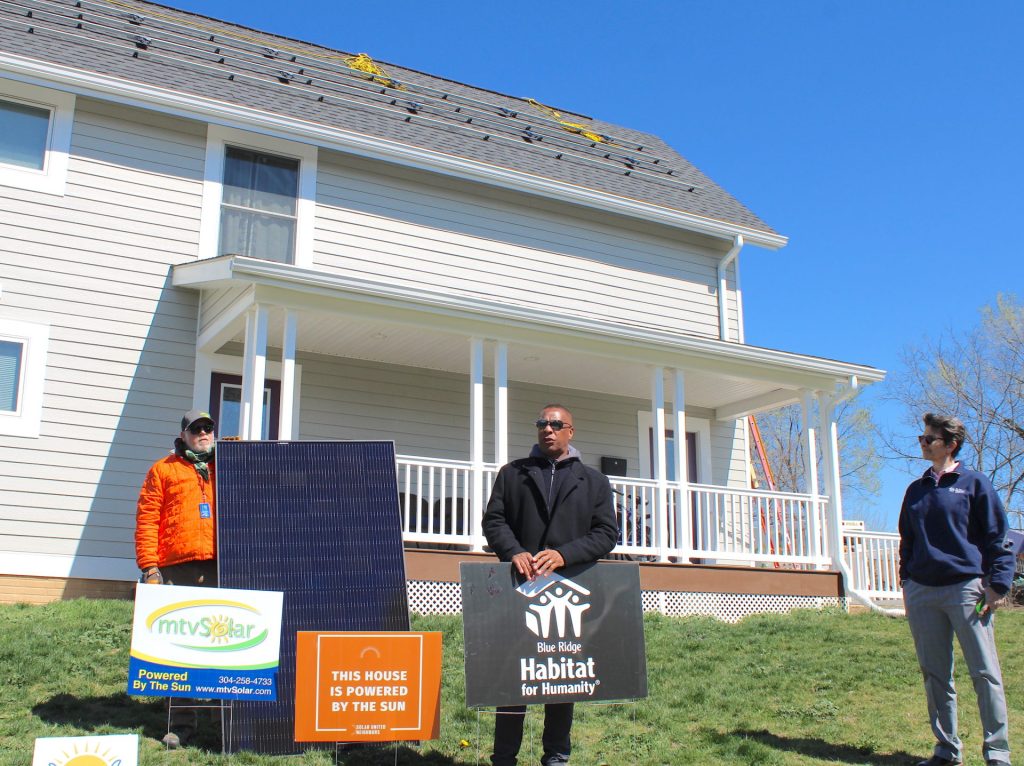
Winchester Mayor David Smith with Kim Herbstritt, Blue Ridge Habitat for Humanity

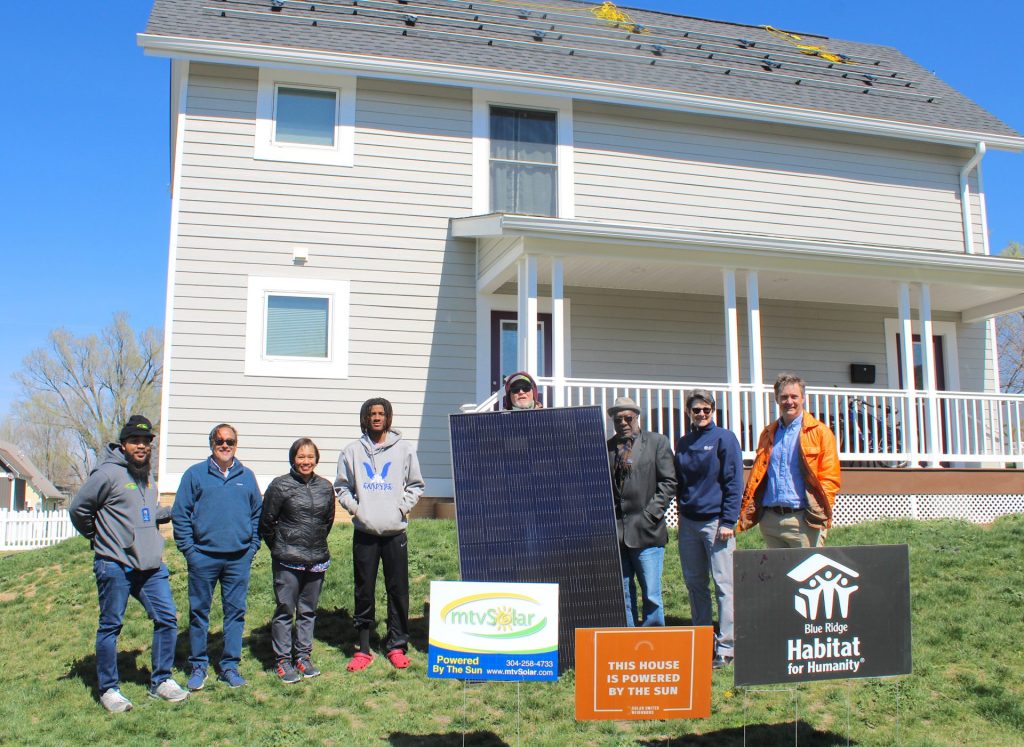
Winchester, Va. city officials and affordable housing advocates celebrated the start of a project this week to add solar panels to five newly-constructed Habitat for Humanity homes in the downtown area. Winchester Mayor David Smith said the renewable energy addition to the two-story homes is exactly what the city’s planners have in mind for the future. The Winchester Star reported on the gathering on Wednesday.

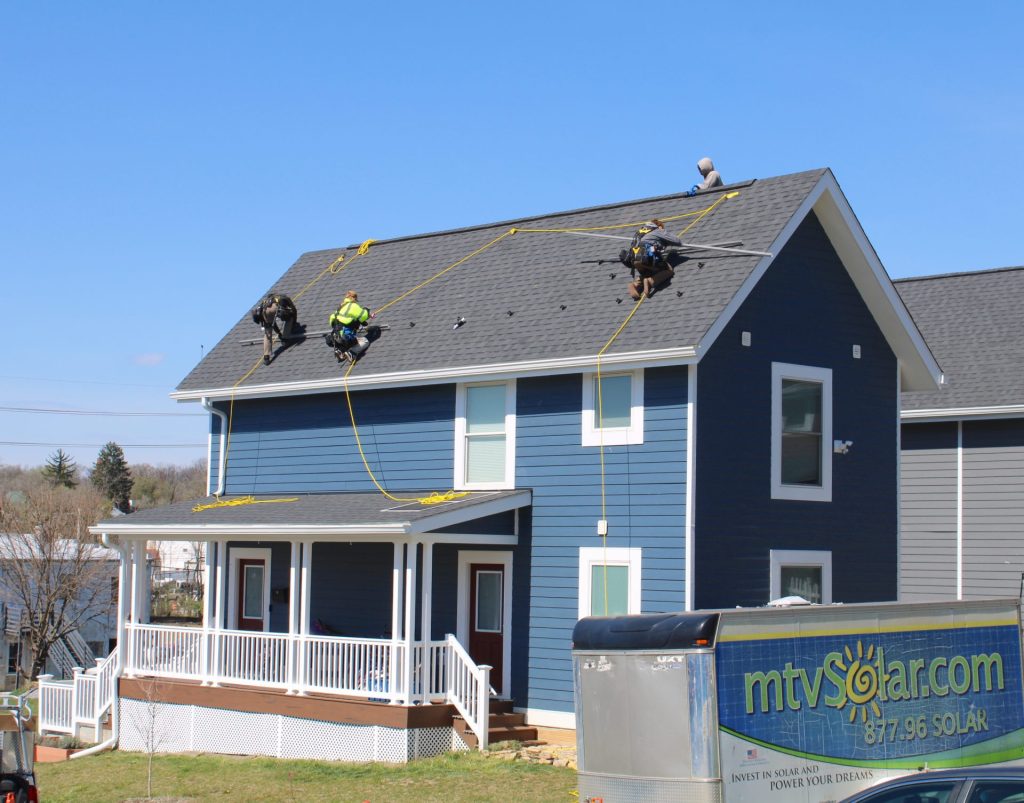
Kim Herbstritt of Blue Ridge Habitat for Humanity welcomed visitors on Tuesday, March 19 to see the homes and watch mtvSolar installation crews work to prepare the solar installations. High winds on Tuesday kept the crews from attaching solar panels to the first of five homes, but the rails to hold the panels are installed and ready. Five panels will go on each home to start.

Homeowners are expected to reduce their energy bills to somewhere around $20 per month once the panels are connected and feeding their electric supply. More Habitat for Humanity homes in the Blue Ridge area will get solar panels in the near future, with mtvSolar as the trusted solar installation partner.

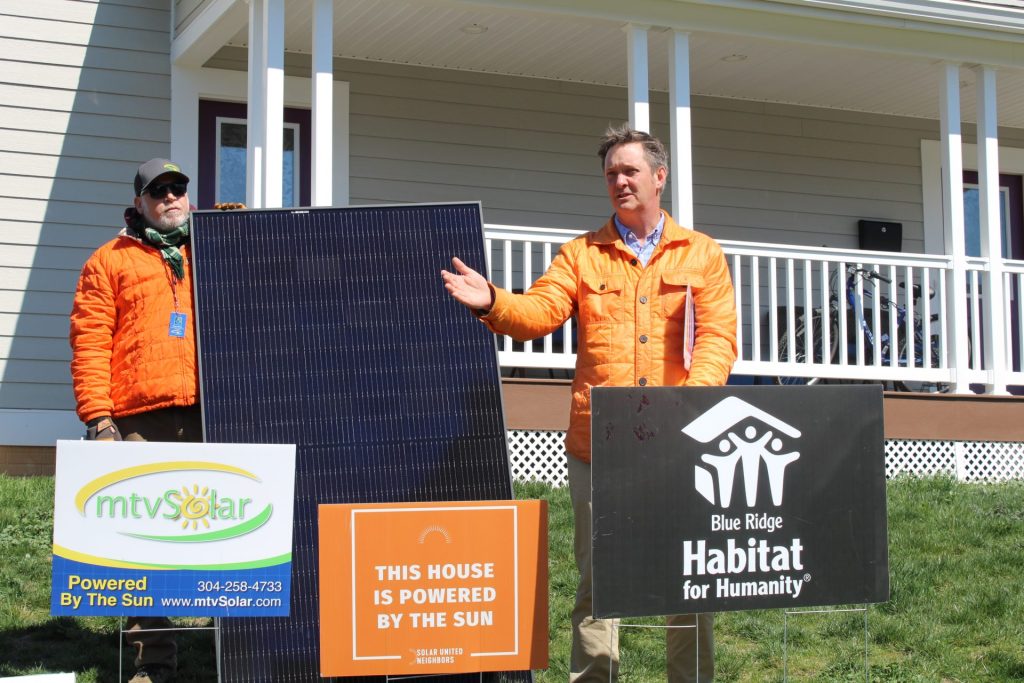
mtvSolar President Mike McKechnie talks as installation crews worked to prepare a roof for solar panels.

mtvSolar Mike McKechnie talked about the importance of making homes affordable for residents over the long term by fixing their energy costs. Installing solar panels essentially locks in electric costs, which normally rise steadily over the life of a home, Mike said. When mtvSolar began as a construction company, his crews donated their labor and time to help build Habitat for Humanity homes in the area. Mike McKechnie said 20 years later, mtvSolar is still an advocate for affordable housing and is excited by the movement toward more energy efficient homes. The company continues to support the mission of Habitat for Humanity through direct donations, community give-back partnerships and reduced-price work. mtvSolar customers can choose to give a panel to community projects like Habitat for Humanity when they purchase their own solar energy system.

Jeff Heie of GiveSolar, headquartered in Harrisonburg, said charitable donors have made it possible to add solar energy systems to Habitat for Humanity homes throughout Virginia, adding another level of sustainability both to affordable housing and the environment. Additional solar energy projects are in the planning stages.

Jeff Heie, GiveSolar

Blue Ridge Habitat for Humanity to install solar on five Habitat homes

Blue Ridge Habitat for Humanity, GiveSolar, Mountain View Solar, and Habitat for Humanity Virginia are partnering to install five solar systems on recently-completed Habitat for Humanity homes in Winchester, VA.

Media and the public are invited to a reception on Tuesday, March 19, 2024 from 1 to 2 p.m. for light refreshments and to observe
some of the installation. Reception location: corner of Chase St. and Elk St. in Winchester, VA.
Blue Ridge Habitat built the homes while families worked to complete their sweat equity prior to purchasing the home at an affordable mortgage. GiveSolar, in partnership with Habitat for Humanity Virginia, is providing the funding for the solar systems. And mtvSolar will professionally install the systems.

This project will greatly reduce the energy burden of the families who live in them. Participating homeowners will pay a $20 monthly lease payment for 10 years and save between $50 and $70 per month on their electric bills as a result of having solar. Over the 25 to 30 year lifespan of the solar system, families with solar will save $20,000 to $25,000.

“Integrating solar panels on homes directly benefits communities by reducing individual carbon footprints, cutting energy expenses for homeowners, and contributing to a cleaner and more sustainable local environment. This sustainable choice not only empowers residents to lower their electricity bills but also fosters a sense of environmental responsibility, making solar energy a positive force for community well-being.”-Kim Herbstrit, Executive Director of Blue Ridge Habitat for Humanity.


Habitat homeowner Karen Burrough moved into her new home in March of 2023.

“I’ve been excited about this opportunity ever since I first heard about it before I moved into my new home. I’m thrilled that these solar panels will soon be installed and I will start saving money on my electric bill.”

Mike McKechnie, mtvSolar President

During this project, mtvSolar will install 12 solar panels and related equipment on each of the five participating homes. The solar energy generated by the panels will directly offset the electricity demand of each home. Any excess energy produced by the home’s solar components will be distributed on the local electricity grid and homeowners will receive credit for that energy on their bills. During the spring, summer, and fall months when solar generation is at its highest, homeowners who are prudent with their electricity usage could see an electric bill of less than $10.

Jeff Heie, Director of GiveSolar, said, “Habitat has recognized that affordable housing is about both making the purchase of a house affordable and making the ongoing operation of a home affordable. Solar is an excellent tool to minimize electricity bills while contributing to long term environmental solutions.”

“It’s one thing to get a family into a home, but making it more affordable for them to stay in that home over the long term by reducing their monthly costs is a long-lasting benefit that we’re proud to be part of,” said Mike McKechnie, president of mtvSolar.


Blue Ridge Habitat for Humanity has built 89 homes in the past 26 years for working families. They complete critical home repairs, have an Aging in Place program to support seniors living on limited income, and operate the Winchester ReStore which generates funding through the generous support of donors and customers all working to support affordable housing in the region. They are proud to partner with GiveSolar and mtvSolar on this pilot project.

GiveSolar is a nonprofit social impact organization that aims to assist other non-profit organizations and homeowners with low income to gain access to solar energy through organizing community-based mutual aid. Since 2020, GiveSolar has been raising funds to help Habitat affiliates in Virginia to launch solar programs. In partnership with Habitat for Humanity Virginia, GiveSolar is supporting fifteen Habitat affiliates across the state as they offer solar to the families they serve. Funding for these solar systems comes from the American Institute of Architects, Just Pax Fund, Clean Virginia, and other private donors.

Founded in 2009, mtvSolar is the leading renewable energy partner for residential, commercial, non-profit and government solar and battery solutions in the quad-state area. The company has installed more than 30,000 solar panels in the last 15 years. mtvSolar continues to lead Virginia, West Virginia, Maryland, and Pennsylvania through the professional installation of solar and battery systems to help customers meet their renewable energy goals and budgets. mtvSolar’s expertise and customer-focused approach has earned it industry awards from Tesla and other component manufacturers for high quality installation, service and
product feedback.

How Net Metering Can Eliminate Your Electric Bill

In today’s energy-driven world, soaring electricity costs have become a growing concern for homeowners and businesses alike. Fortunately, there exists a sustainable solution that can not only reduce your reliance on the traditional grid but also potentially eliminate your electric bill altogether – solar energy with net metering.

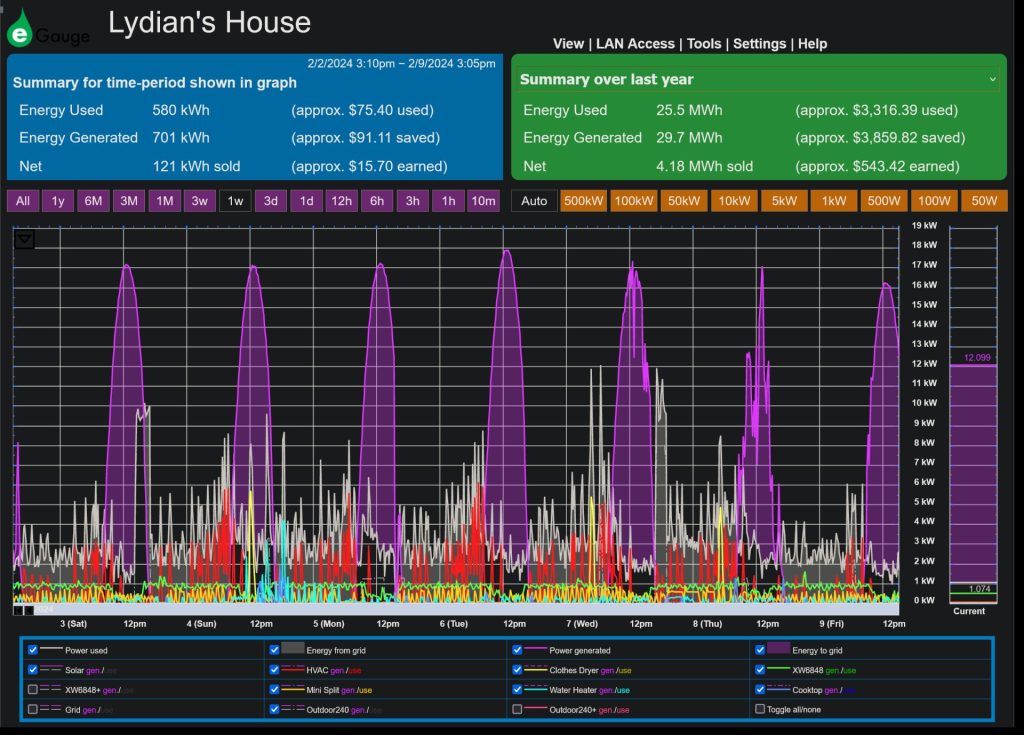
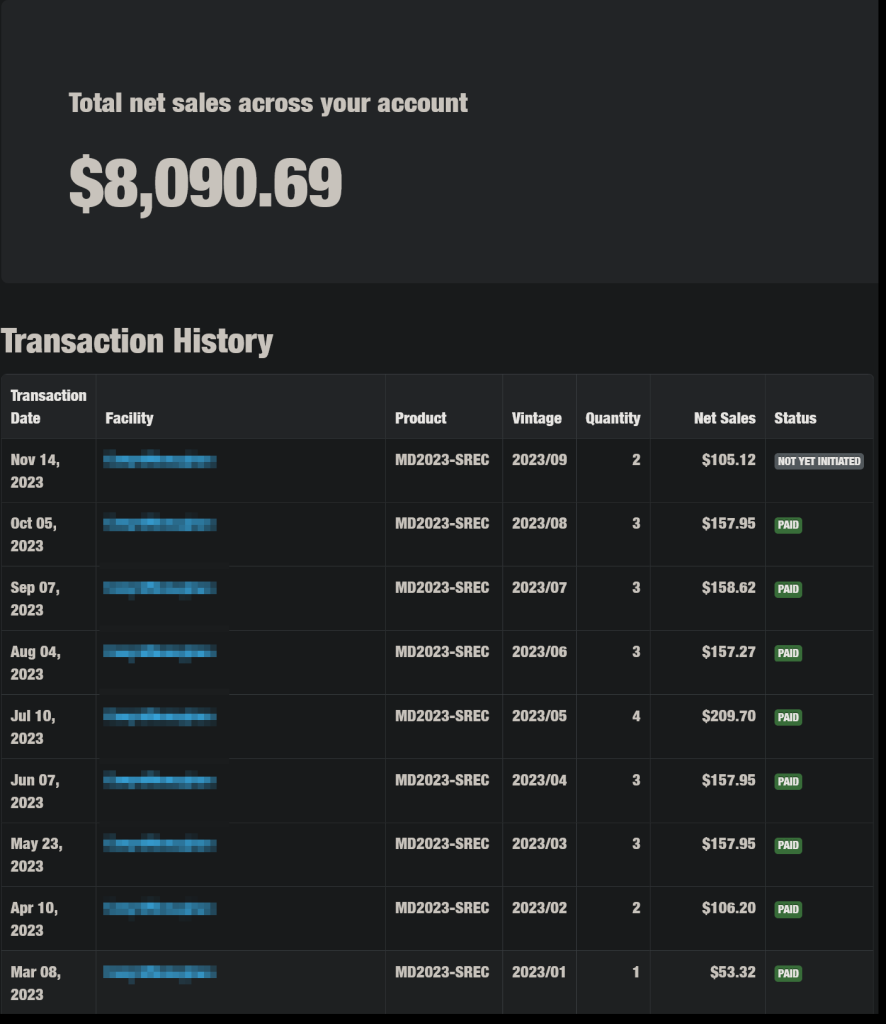
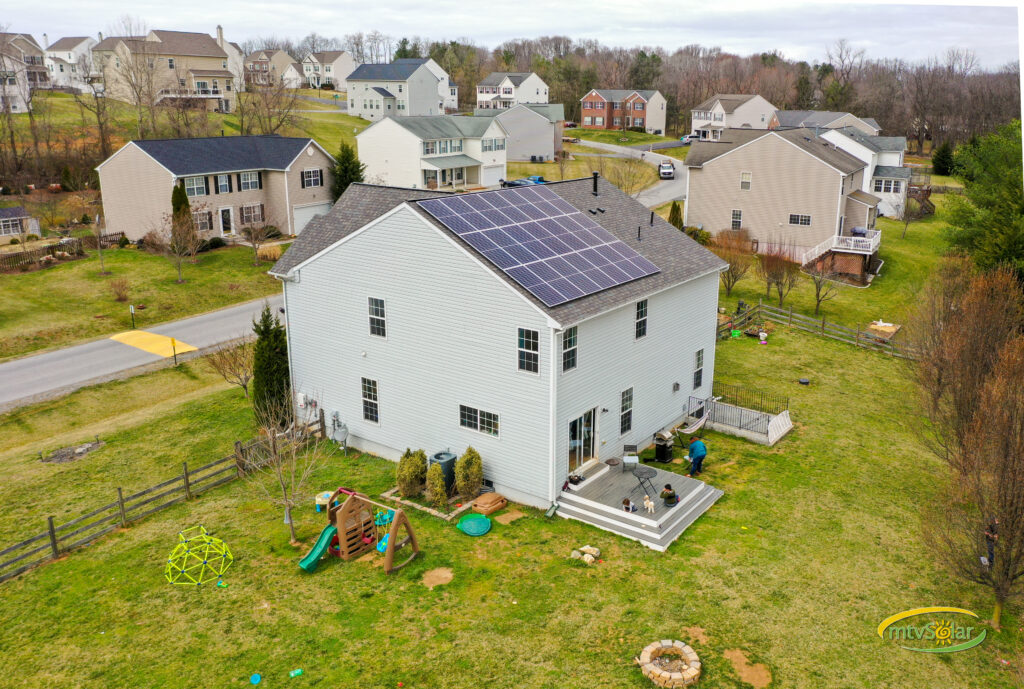
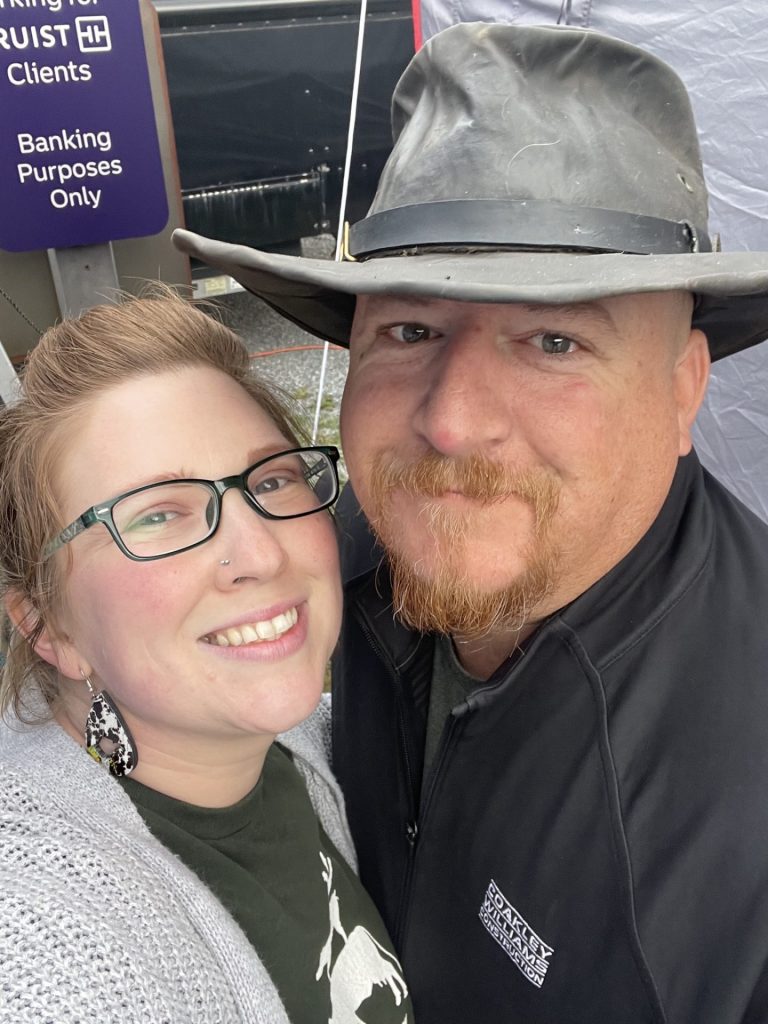
Lydian, an mtvSolar employee residing in Maryland, knows first-hand the transformative impact of solar power. With her solar system, she has achieved energy independence and financial savings that have surpassed her expectations. Her system paid for itself in a mere six years, thanks to the combined benefits of SREC (Solar Renewable Energy Credits) income and avoided utility costs. Today, her solar panels generate a continuous stream of free electricity, making her residence a revenue-generating home.

The key to Lydian’s success lies in the synergy between solar power and net metering. Net metering essentially acts as an energy exchange program. When your solar panels generate more electricity than your home consumes, the excess energy is sent back to the grid, earning you credits. These credits can be used to offset future electricity bills, effectively reducing your overall energy expenses.

How Does Net Metering Work?

The process of net metering is straightforward. When your solar panels generate electricity, it first powers your home’s appliances and lights. Any excess energy is then sent back to the utility grid, where it is distributed to other customers.

The benefits of net metering extend beyond financial savings. Solar energy is a clean and renewable source of power, reducing your carbon footprint and contributing to a more sustainable future. Solar panels can increase the value of your home and enhance its energy efficiency.

At the end of your billing cycle, your utility company compares the amount of energy you consumed from the grid to the amount of energy you generated and sent back. If you generated more energy than you consumed, you will receive a credit on your bill. This credit can be applied to future electricity bills, reducing your overall energy costs.

The Benefits of Net Metering

A Net-Zero Solar Powered Home Is Worth More With A Pearl Certification

Pearl Certification is one way to verify that a home is energy efficient in a variety of ways. Pearl Certification can increase the value of a solar-powered home. First, energy efficiency means that they will use less energy to heat and cool, which will save homeowners money on their utility bills. Second, Pearl Certified homes are healthier than non-certified homes. This is because they have better indoor air quality and fewer potential hazards. Third, Pearl Certified homes have better temperature control and humidity levels than traditional homes, making them more comfortable.

default

Pearl Certification can also specifically increase the value of a solar-powered home. Pearl Certified homes are more likely to have a higher quality solar installation because it requires solar installers to be certified by Pearl themselves. Third, Pearl Certified homes are more likely to have a solar energy system that is well-maintained because one of the requirements is to follow specific maintenance guidelines to achieve certification.

Because of these considerations, Pearl Certified homes with solar panels can sell for up to 17% more than non-certified homes. This is a significant premium, and it can make a big difference in the amount of money that homeowners receive when they sell a residence..

mtvSolar is committed to empowering homeowners like Lydian to embrace the benefits of solar power. With its team of experienced professionals, we offer comprehensive solar energy solutions, from initial consultation and system design to installation and maintenance. Our expertise and dedication ensures that your solar journey is seamless and successful.

Heritage Homestead goes solar

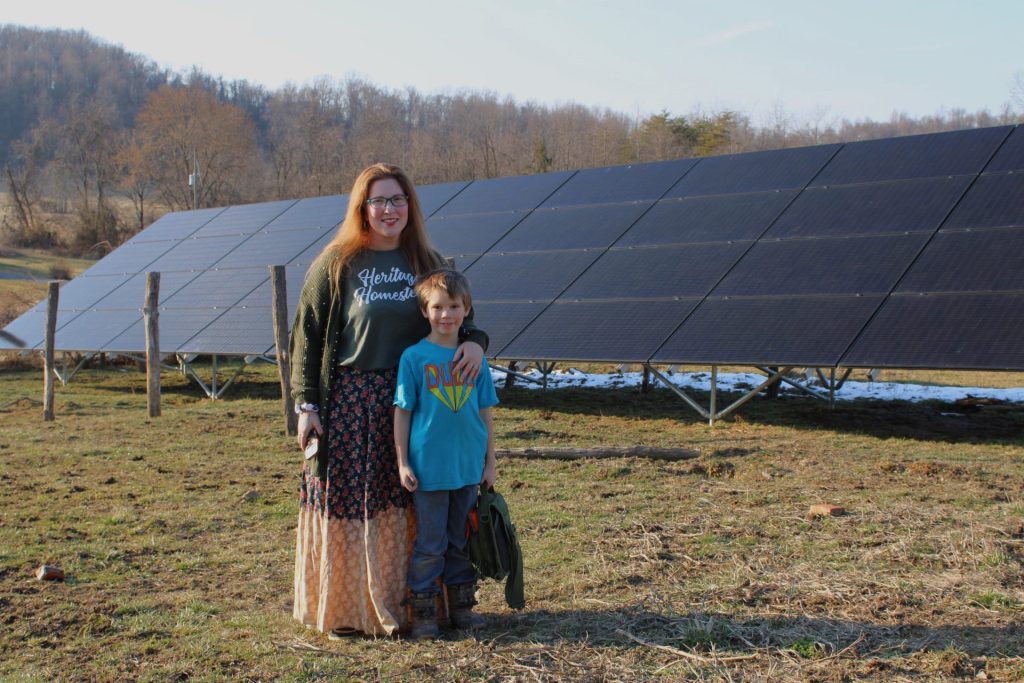
Kathleen and Scott Miller

A unique homestead and home-based freeze-drying business in the Back Creek Valley of the Eastern Panhandle of West Virginia has woven together traditional living principles with modern solar technology to power up their journey toward sustainability and self-sufficiency. 

Heritage Homestead near Hedgesville is owned and run by Scott and Kathleen Miller, with help from Kathleen’s sister Mary Bowie, and extra hands from the Miller’s four children.

“We’ve partnered with Mountain View Solar to integrate solar energy with battery backup into our operations,” Scott said of the couple’s recent step into solar.

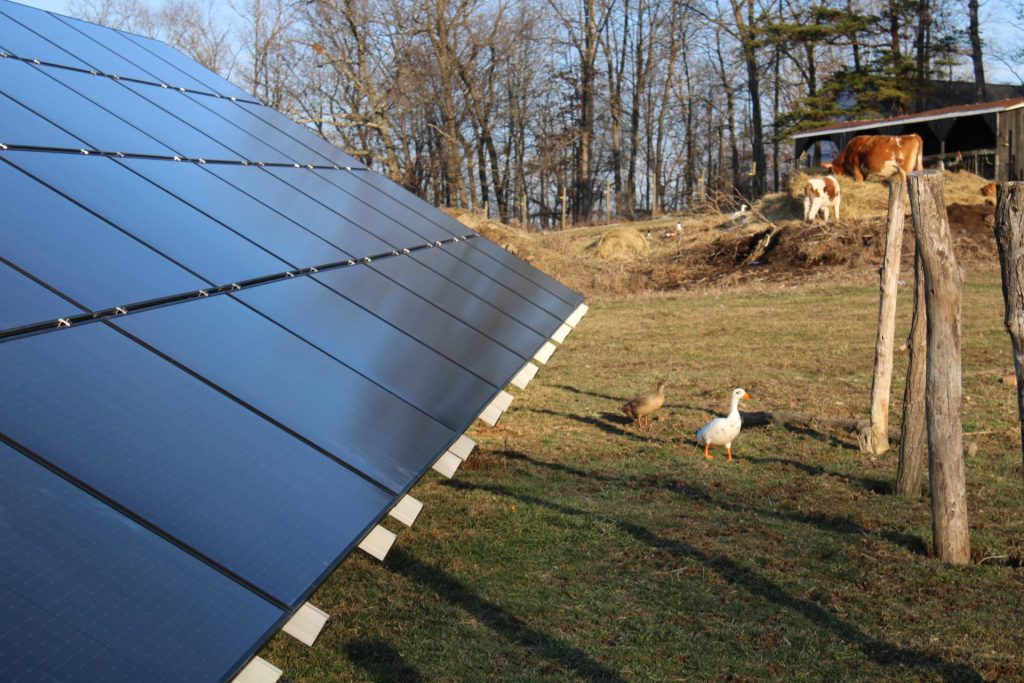
The system includes 60 Tesla solar panels – 40 ground mounted in a grazing field and 20 on the roof of the family’s farmhouse – plus a Tesla Gateway Switch.

“TheTesla Gateway Switch seamlessly allows our entire establishment to run on solar power with battery backup during outages,” said Scott. “During 25 grid down events, the system has provided us with 8 hours of uninterrupted power backup, ensuring continuity of operations.”

“When the power goes out, we don’t feel it,” Kathleen said.

Since the system went active in April of 2023, Heritage Homestead has generated 30.3 megawatts of power.

“With reduced dependency on traditional grid power, we’ve witnessed significant savings in our energy bills,” Scott said.

Those savings add up for the family and their burgeoning business, making and selling freeze-dried fruits, vegetables, cheesecake and ice cream. Products are sold via their website (https://www.heritagehomesteadwv.com/shop) and in regional specialty stores and markets, from Black Dog Coffee in Shenandoah Junction to Orr’s Farm Market in Martinsburg, the Wardensville Garden Market and J.Q. Dickinson Salt-Works in Charleston, W.Va. Kathleen said in just two years, their freeze-dried product line is stocked in all West Virginia State Parks. 

The profits from that business “feed the farm,” said Kathleen. 

Going solar made sense for their electricity-intensive freeze-drying operation and their rural location, where power outages are a regular occurrence.

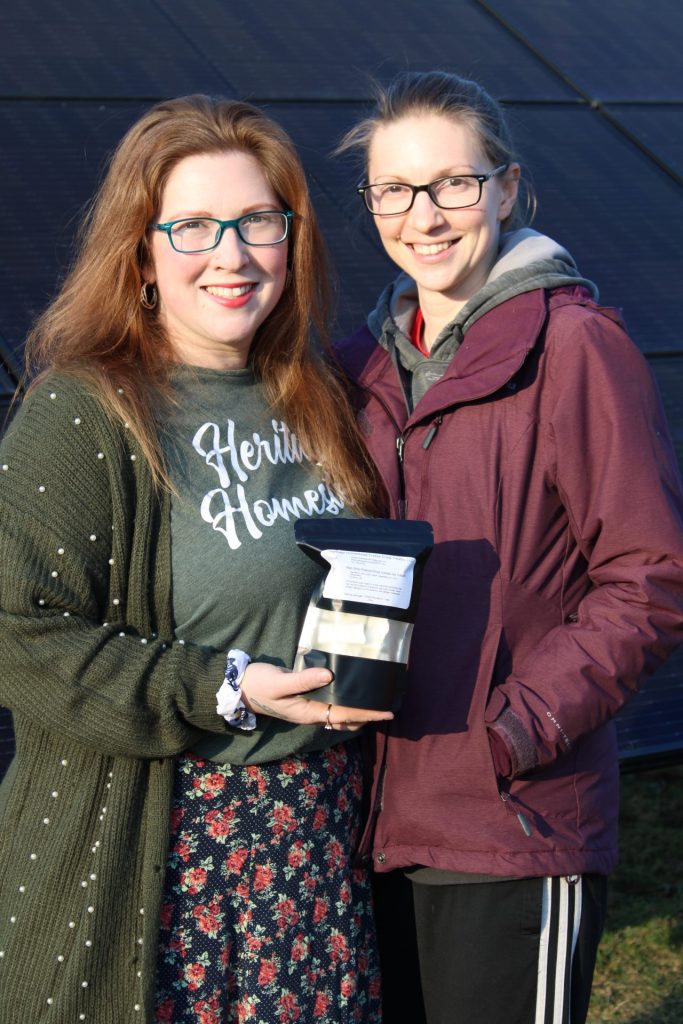
Kathleen Miller and her sister Mary Bowie with their freeze-dried ice cream.

“It was the next logical step,” said Kathleen.

Generating their own electricity from the sun on their small farm also aligns with the Miller’s priorities as a family, a homestead and a business.

“Our commitment to sustainable practices resonates with our customers, enhancing brand loyalty and trust in our products,” Scott said. “We’re proud to lead by example in our local community, inspiring others to adopt renewable energy solutions for a brighter, greener future.

“We want to encourage people to be more self-reliant,” said Kathleen. 

The couple said going solar has “lined up beautifully” and they generate roughly 86% of their electricity needs.

mtvSolar’s willingness to be creative in designing a system meant Heritage Homestead was able to balance solar panels and battery equipment to fit their budget and expected returns. That’s one reason the Millers recommend mtvSolar to folks who ask about their new solar array.

What’s next on the solar-powered family homestead? A greenhouse to extend their growing season, tending to the food forest that’s maturing in one of their fields and promoting the skills of homesteading for other people who are interested in embracing the lifestyle. There’s a lot to learn, as the farm teaches them every day.