


Electric vehicles (EVs) continue to evolve and claim a larger share of the automotive market. Luckily, their rise is in tandem with the increased availability and decreased cost of solar energy generation systems.
Homeowners and businesses that put solar panels to work for their electric needs see an even bigger return on their solar investment when they drive and charge electric vehicles off their system.
mtvSolar’s Director of Technology & Design Lydian Miles-Monaghan has been tracking the payback from her EV since October 2022, along with the savings from her property’s solar generation system since 2017.
“I have driven about 7,000 miles in my EV since I got it in October 2022. I’ve used 1,821 kWh for charging, which if I had to pay for it would be $218 or so. But my car has been 100% solar charged and cost me nothing,” she reports.
Seen here, the energy of the sun is directly fueling her car:
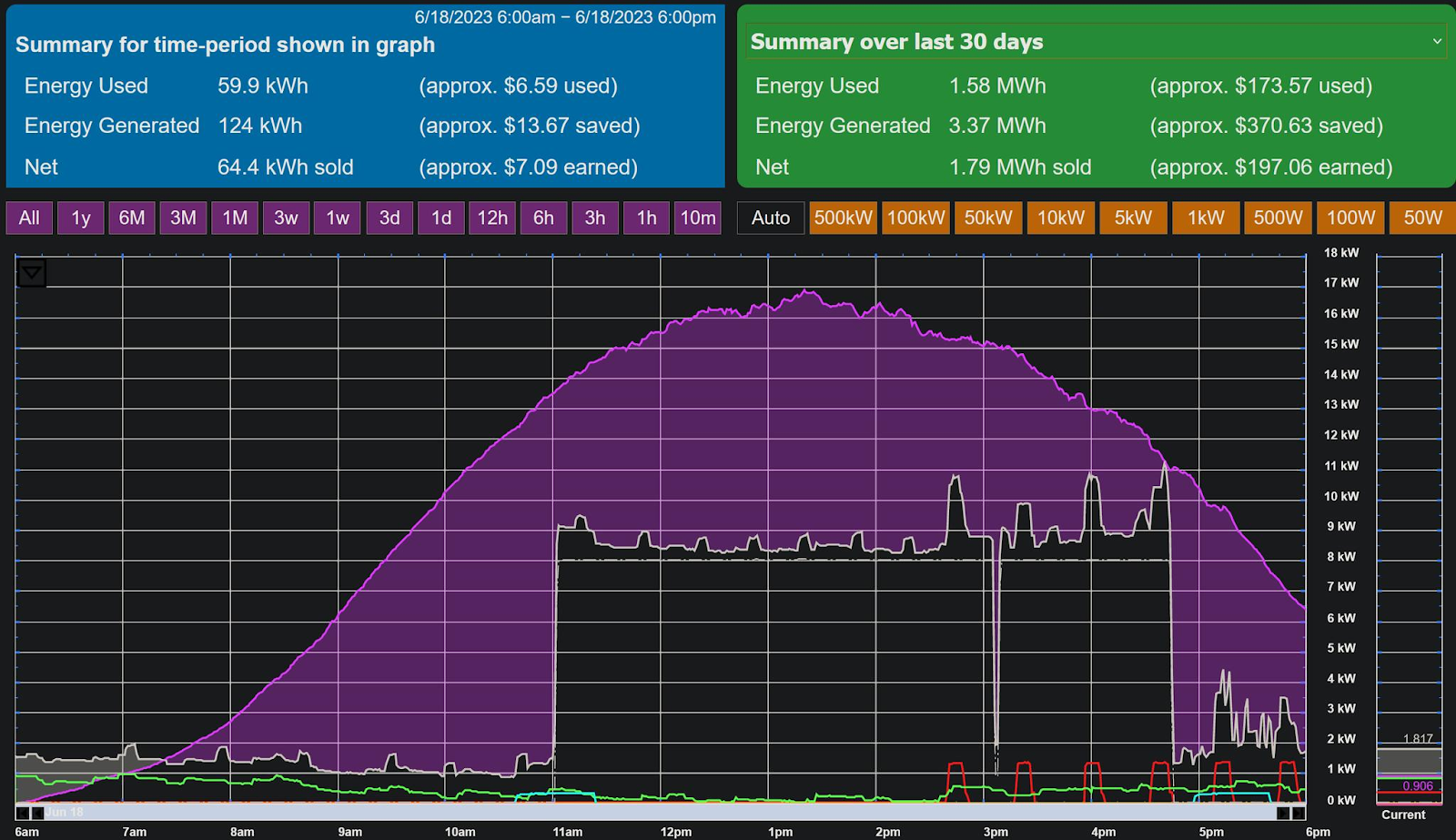
The gas version of her Kona gets roughly 32 miles per gallon. At the average cost of $3.30 per gallon, she figures she would have burnt 219 gallons of gas, at a cost of $722.
Getting an EV and charging it on a regular electric grid charger would reduce travel costs to less than a third of the gasoline average, with the added savings of having no oil changes. In her case, the charging happens off solar-generated electricity, so the power costs nothing extra.
“The energy of the sun is directly fueling my car,” she notes. “My EV will break-even on the ‘electric premium’ vs regular Kona at around 6 years, then it’s nearly free driving with 4 years of battery warranty left. But EV batteries often go over 200k miles, which is a lot of nearly free miles.”
As for the solar energy system, it has mostly paid for itself already before the EV. Here’s how she breaks it down:
Since 2017:
Not paid utility: $17,100
MD SRECs: $7,302
Tax credits: $11,808
=$36,210 saved in 6 years
Going forward:
Avoided utility cost over next 25 years: ~$90,000
Maryland SRECs ($40 est) : ~$30,000
All assuming MD utility rates do not increase above 0.12c per kWh !
See how the panels and vehicle charging work together in her video: https://youtu.be/KxOoXfgEqrM
With more Federal incentives available to help pay for solar energy upgrades to homes, farms and small businesses, a solar investment now will pay for itself in a shorter time period. The benefits of owning and using renewable energy – the reduction in CO2 emissions and a reliable electric source – keep pace with the financial return and stretch out far beyond the last dollar recouped. Add an EV to the mix, and ROI drops even further.